
Grounded and Growing
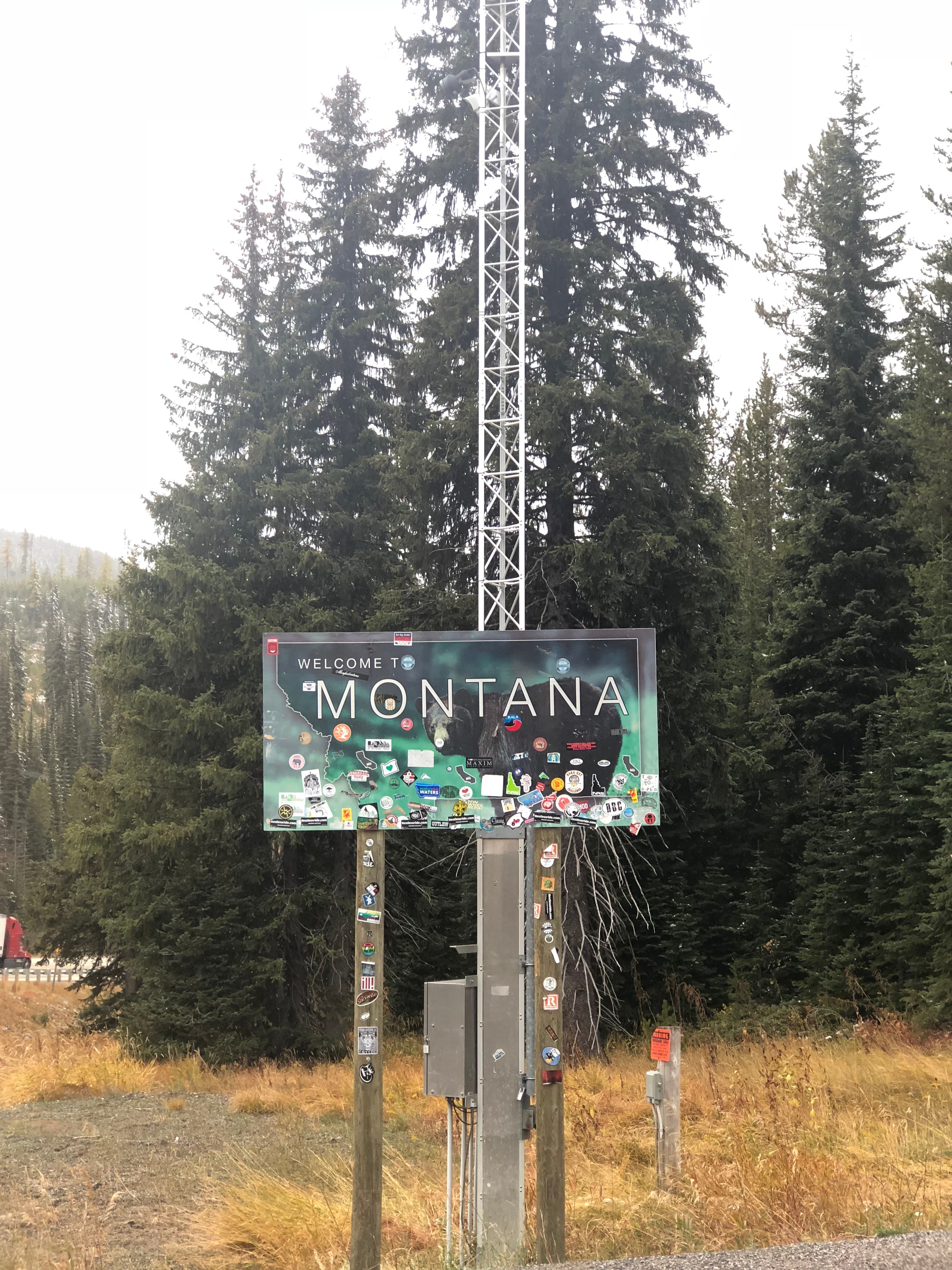
Welcome to...

Grounded and Growing
I don’t remember the date or time when I first encountered Natalie Diaz’s poem, “The First Water is the Body” because as I read I was transported to worlds beyond this world. Worlds before this world. Worlds that should be this world.
The interrelated water and body begins with the Earth. Mother’s veins, lifeblood, flow. To “carry a river,” as Diaz notes at the beginning of her poem, is to be embodied. I knew, at the core of me, I was a river, a tree, a mountain, but I did not have words or vision to ground me in place, to grow me through time. Reading Diaz was the first time such an expanse opened. Maybe it was the first time I was ready.
The river, any river, which for me now means the Rio Grande or the Rio Costilla or the Rio Hondo, is my body because I immersed myself in the river. The river is my pew. A pew to the acts of the divine. And it wasn’t until I baptized myself in her flow, with only my dog as a witness, that I awakened to the power of what Diaz teaches: “I must preserve the river in my body.”
Randy Woodley taught me how the ways of wholistic peace intertwined with the community of creation… if only we will love her so, join her, become co-sustainers of this holy garden. So when we read his work, Shalom and the Community of Creation: An Indigenous Vision I saw the water in a new light, Oak tree in a new light, brother deer in a new light. I am not only connected to the greater than human world, I am in communion. We are kin, and ironically, as an only child, I found the siblings I’d been searching for thanks to the work of Diaz and Woodley.
_________
For many years I was grounded in place, but I did not know the place. Born and raised at the base of the Bridger mountains, her highest peak home to my wedding proposal over twenty years ago, slopes I’ve skied and mountain faces I’ve traversed. One place, a place where I grew up, was canvassed in oak trees. You can still find the place, but not the trees. You only need to map your way to “Oak Street.”
Vine Deloria Jr. asked the question: “Who will listen to the trees, the animals and the birds, the voices of the land?” It took me a long time to learn to listen.
Twenty eight years after the death of the oak trees I found myself crying in a convention center lobby. This was the first time I had ever shed a tear for these friends from my childhood. It was the “Spider Tree” I grieved most, but an entire family of a dozen old Oak trees had also been uprooted by machines, sliced and consolidated, left to die, in the fall of 1996.
The day of the demolition is not one I remember. I remember the days prior, playing among the trees before the city came to cut them down. One friend, Lee, was the most adventurous of our group. Sometimes as I jumped at a low branch or gathered artifacts from the dirt, I’d lose track of Lee among the leaves above my head. It must have been the result of how the late afternoon light was shadowed through the higher boughs, casting hideouts twenty feet off the ground. I wrote my name in the dust at the base with a broken branch, less like Jesus, and more like I was an autographing athlete embracing the fame I’d never find. Hanging from the branch I was brave enough to reach, pretending it was a basketball rim.
Lee climbed higher, laughing and silly, for he had dubbed himself “Pickle Peewee Lee” on the day we chose nicknames. I was “the Breeze.” “Tater Tot” rounded out the triad. Tate was as courageous as Lee, but more prone to try his luck at the bouncing ends of the branches, testing their strength. Each of them was always above my head as we shouted, and giggled, and imagined new worlds. My nickname was the only one that didn’t have anything to do with my given name. Did Oak Tree name me?
_______
Dreams lived in those trees and around them and among them. Decades of dreams, maybe even a century worth of dreams for these trees were old enough to house them. Most of the dreams remain a mystery, a few of them my own. In order to arrive at the Spider Tree we navigated a path along a small seasonal creek on the backside of my neighborhood. The packed gravel trail is an apparition. I can no longer see, even in my dreams, how it guided us to these mighty Oaks. All of it erased. Torn down by time and trucks.
The memories of how a group of boys would arrive at the stand of Oak trees is the type of memory that’s been ripped from the ground, tamped down, then spread flat. The type of memory where Earth is crushed and swirled, then poisoned, to become asphalt. To become a memory hard, black, and cracked. The type of memory where vehicles, three decades worth of them, trample remnants under wheels unaware of the boys who once swung from the limbs of their beloved “Spider Tree.”
My own memory of these trees and the way to find them is a dense fog. Discombobulated, I’m unable to adjust my eyes to see more than the remnant of that designated dirt path, a mythical grassy field waves us on, and the trees stand in line with limbs reaching out from one to the other… to me. Spread wide, as if they were on the slowest walk imaginable, hand in hand, no rush to be anywhere but where they’ve been planted. Who will listen to the trees?
Who will listen to the trees? This is not a question I created, but it was wisdom passed down by an array of Indigenous elders. Deloria’s words blink and beckon, “Who will listen to the trees, the animals and the birds, the voices of the land?” And while I didn’t know to ask the question when I was twelve, I’m learning to ask it now. The past can be a faithful teacher, but I wonder about the people who green-lit such anti-greenness. They are hard to conjure because…
Who loves paved roads more than fifteen elder Oaks? Who is in such a hurry… for expansion, development, power, convenience that they are not so grieved by the de-treeing as to change the course of their roads? Of their lives? Who could be so deaf to the whispering leaves now plastered beneath asphalt and sealed cracks, creaking out a muffled crunch of what once was? Who, the moment the first Oak fell, could possibly swing their pointer finger in the air like a lasso, kick their boot heel against the slaughtered trunk, and shout for the rest to fall in line, in a line, to be taken away, forgotten in the exhaust of driving across town with a little more ease?
Piled among these composting questions is the audacity of the Western worldview to commemorate such trailblazing by naming the roadway to come, Oak Street. Oak Street, devoid of Oak trees, we remember the place where they died.
I loved reading your words. What a beautiful expression!
I especially giggled at your nicknames you gave each other.
Such solid memories are a gift!!
Great job Chris.
I am grateful for one of the many pine trees around my parent’s house. I have listened to that tree. I have to continue to listen. Thank you.